We are currently revising the way wheels interact with their surroundings in The Bus. The existing systems are being replaced by the new 3D Collision System, which can detect obstacles around the wheel more reliably.
Note on the screenshots shown
For the screenshots shown here, we used a bus from *Long-Distance Bus Simulator* to illustrate the systems. However, the new 3D collision system will initially be implemented in *The Bus*.
The systems used to date
Previously, the Lateral Collision System and the Longitudinal Collision System were used. Both systems employed a simplified detection method that started from a point near the center of the wheel and checked for obstacles in only one dimension.
Lateral Collision System
The Lateral Collision System was responsible for detecting side impacts. If a wheel was close to an obstacle, it sometimes happened that the obstacle was not initially detected correctly. Instead, often only the road surface was detected. As a result, the wheel would visibly intrude into the obstacle without the suspension reacting to it. This was particularly unrealistic for obstacles located to the side of the wheel.
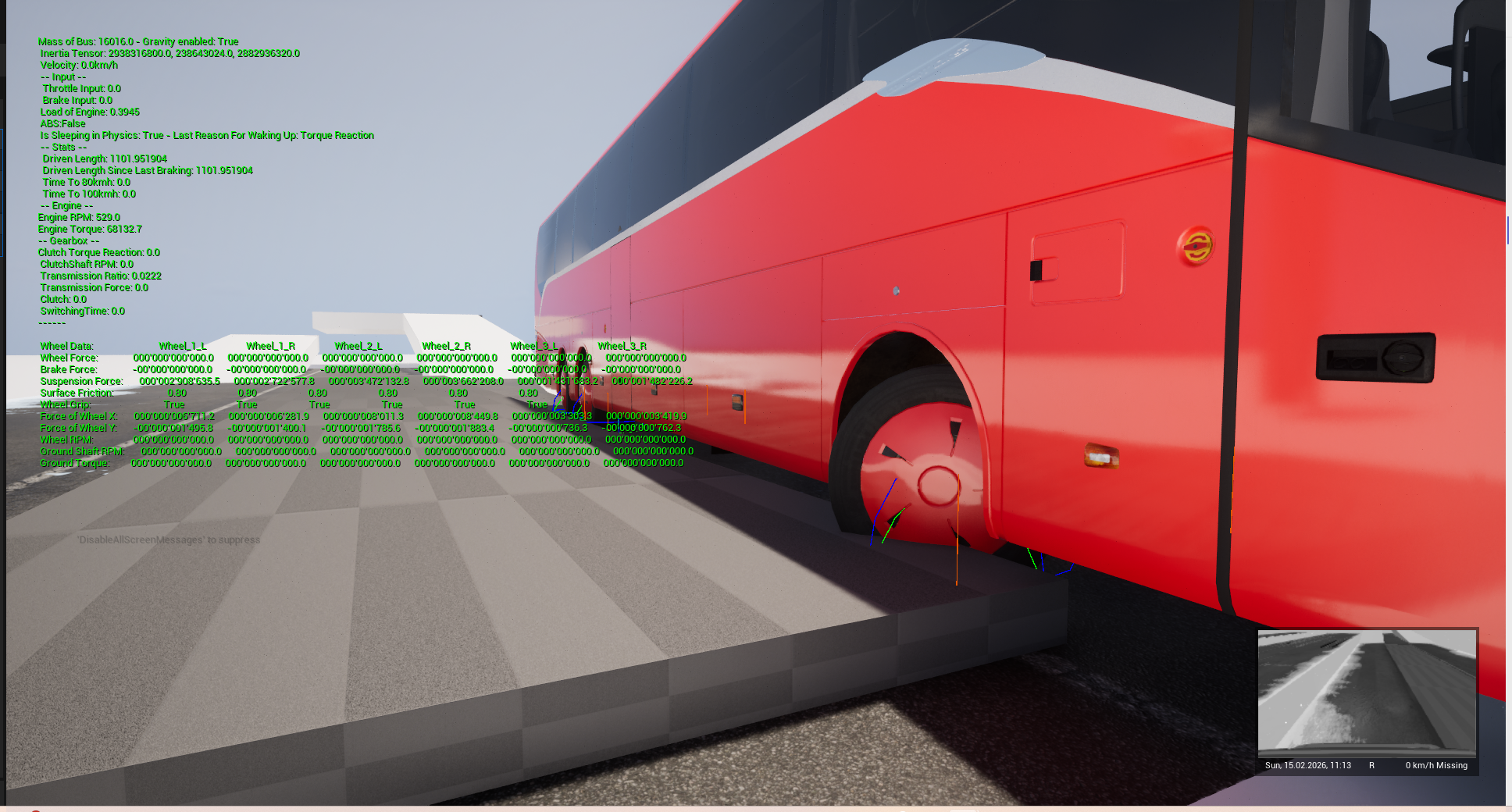
Longitudinal Collision System
The Longitudinal Collision System operated on a similar principle, but for obstacles in front of or behind the wheel. When the vehicle was approaching an obstacle head-on, it was also possible for the wheel to detect the obstacle too late. In certain situations, the sensor continued to detect only the road surface at first, even though the obstacle was already directly in front of the wheel. As a result, the wheel could also collide with the obstacle without the suspension activating properly.
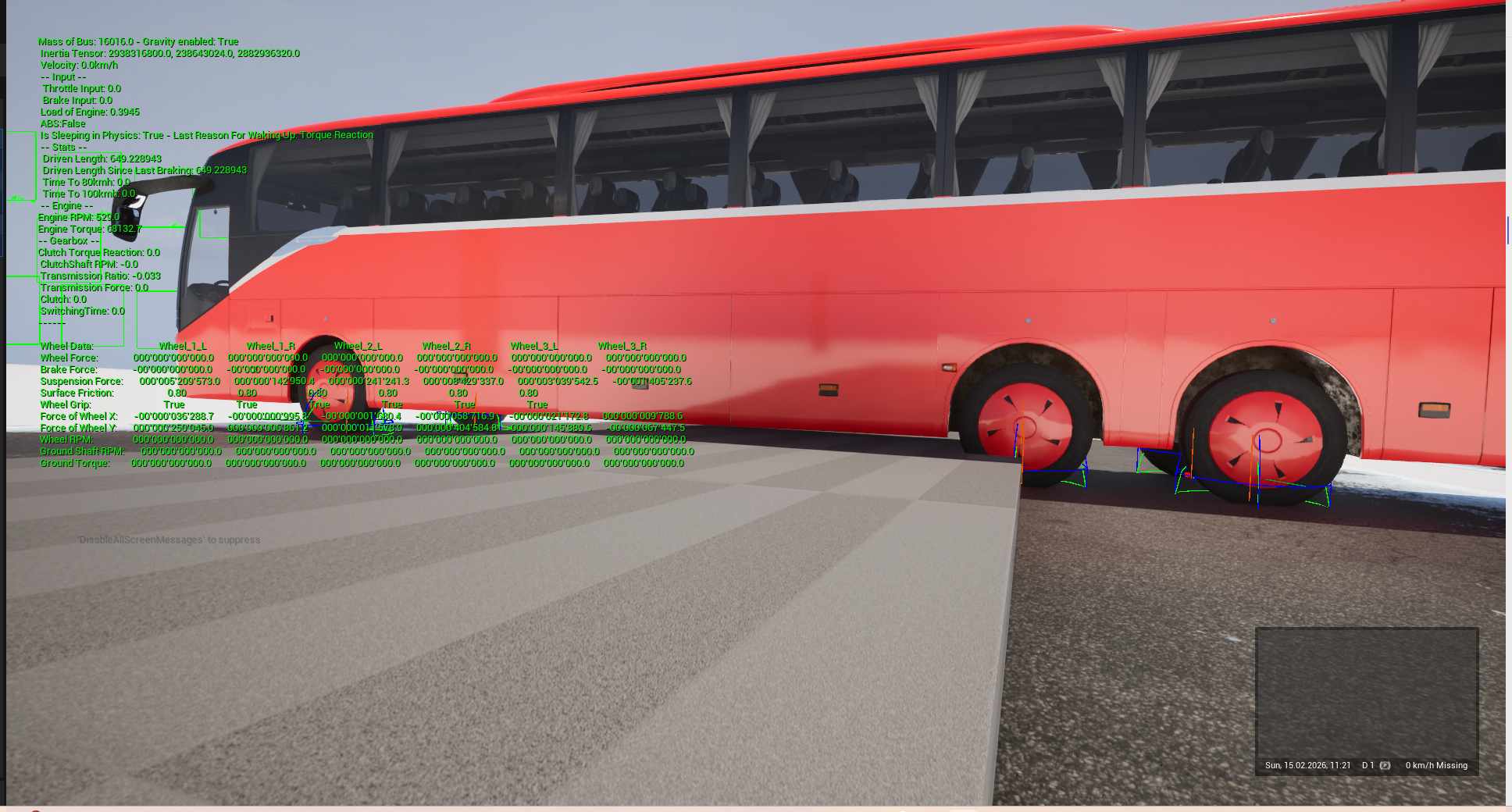
The Common Problem
In both cases, the problem was that the obstacle’s position was calculated using only a simple line drawn from the center of the wheel. As a result, the obstacle was not detected until the center of the wheel was exactly level with the surface or had already passed it. In other words, the system reacted too late.
The New 3D Collision System
With the new 3D Collision System, we solve exactly this problem. The new solution combines the previously separate approaches of lateral and longitudinal collision detection and now scans the area around the wheel in three dimensions. As a result, obstacles are no longer detected in just a single direction, but throughout the entire relevant area around the wheel.
As soon as the 3D Collision System detects an obstacle, the vehicle responds accordingly. The wheels no longer intrude unnaturally into obstacles; instead, they can detect obstacles earlier and respond to them in a more predictable manner.
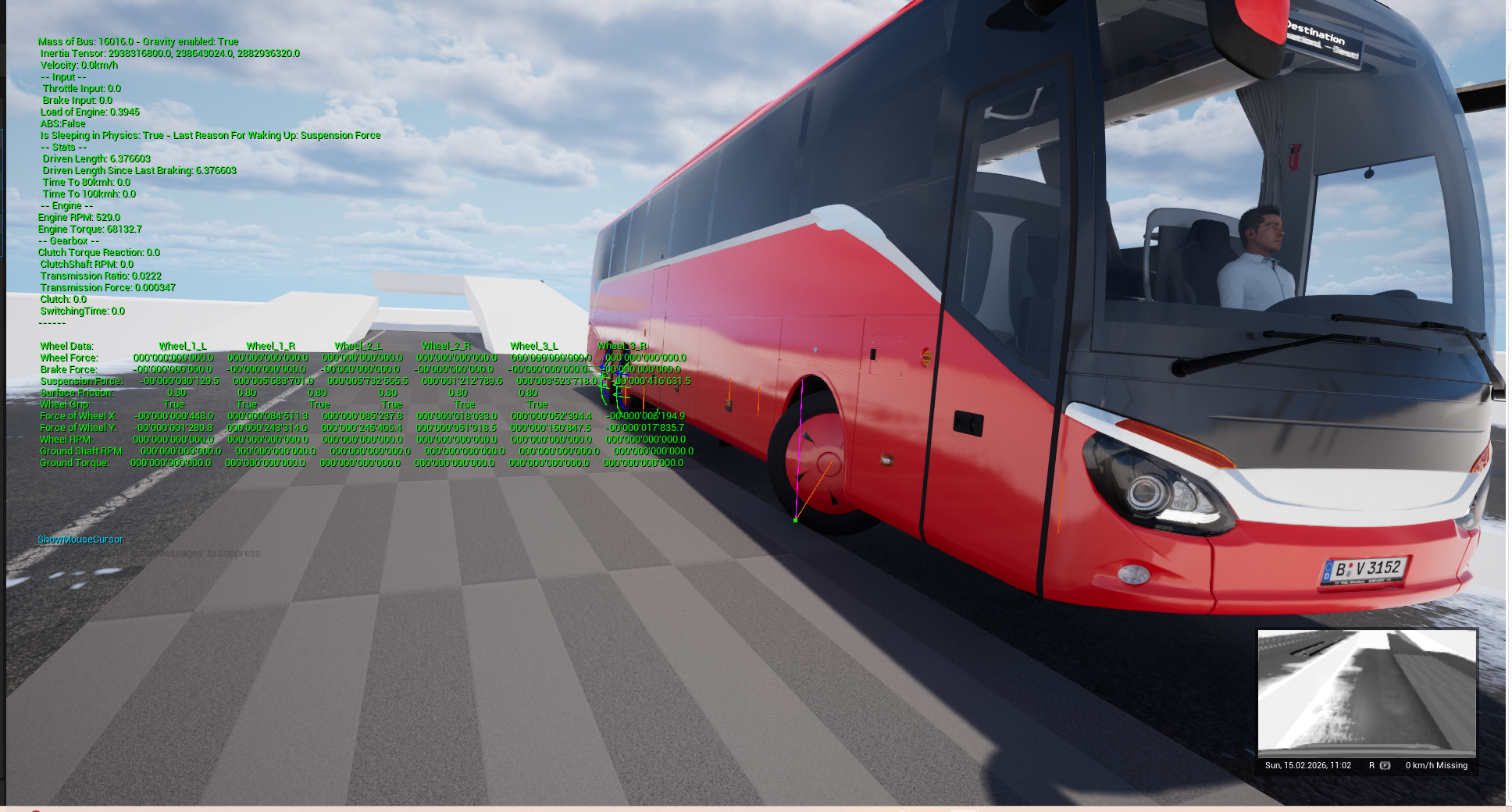
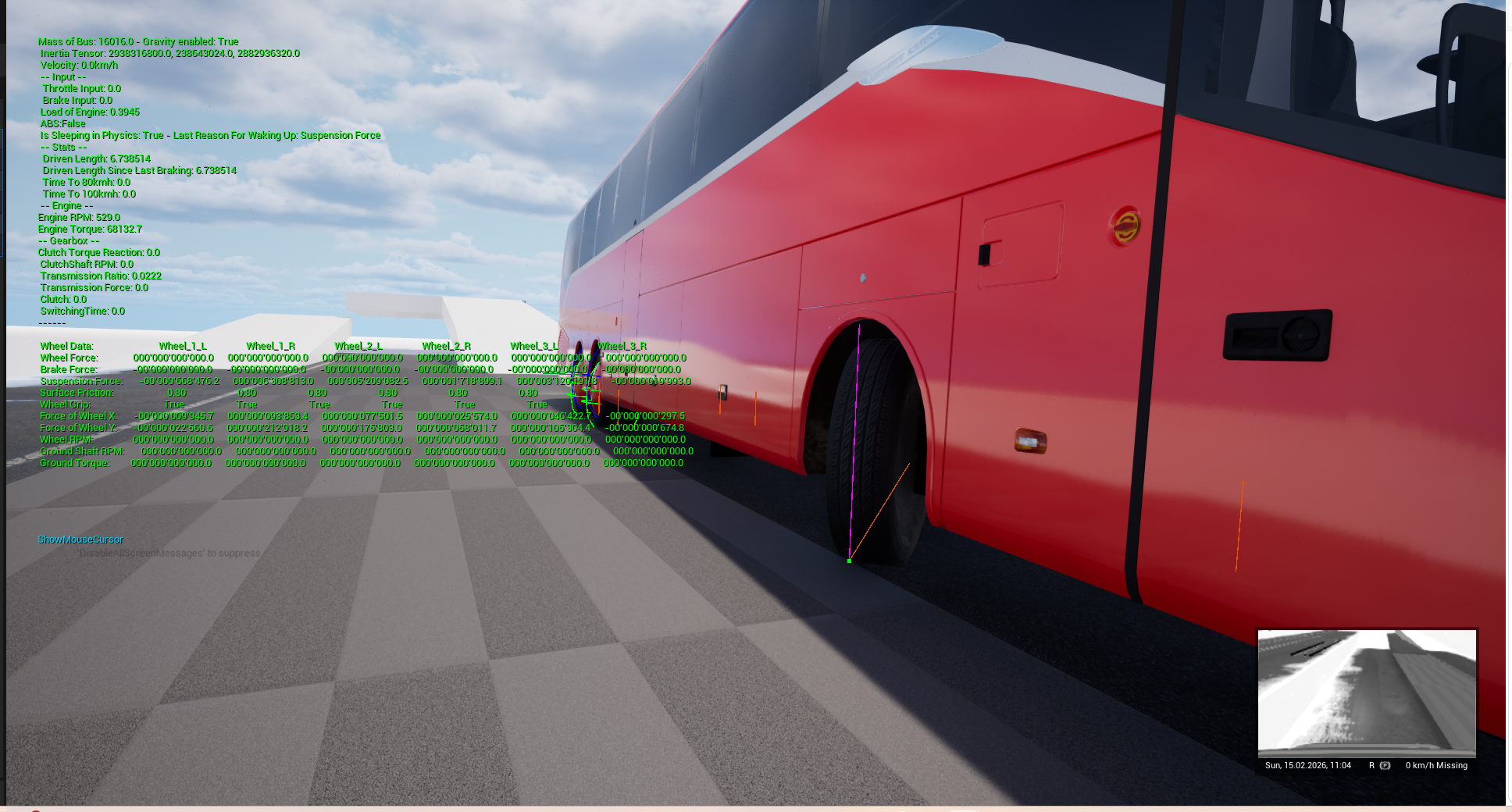
This is particularly noticeable during lateral contact with the surroundings, such as when the vehicle is driving close to a curb. For example, if you drive parallel to a curb, the new system allows the wheel to align much more precisely with the actual shape of the tire. As a result, the wheel runs along the curb instead of sliding unnaturally over it or crossing the curb line.
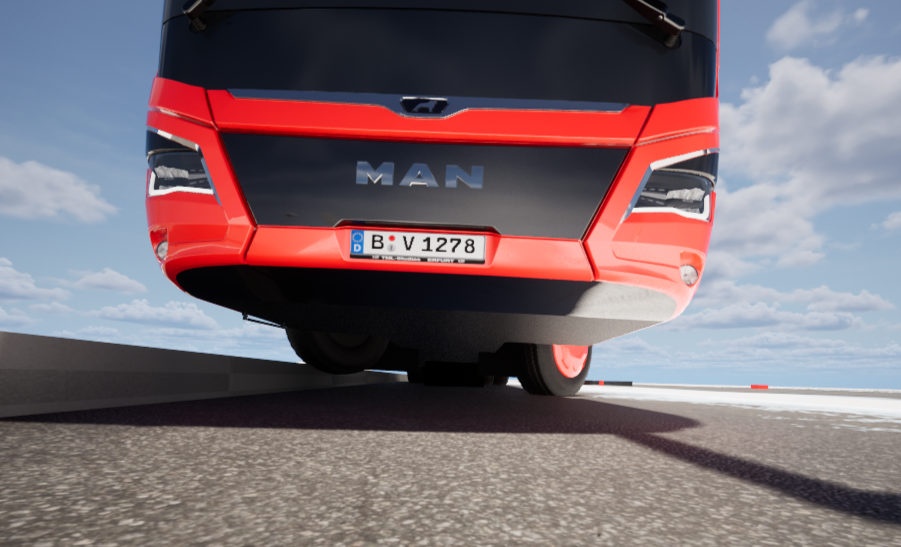
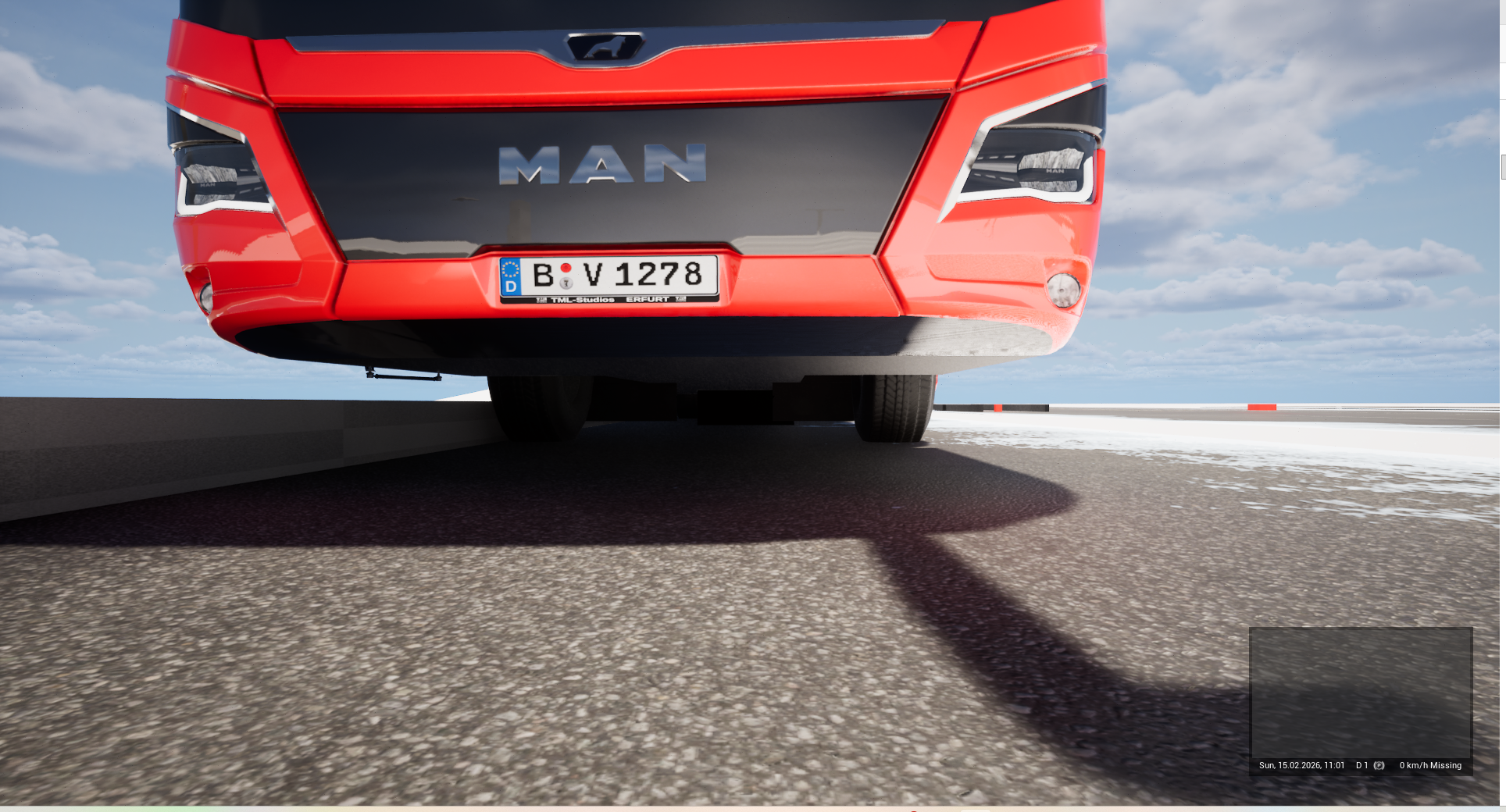
The new 3D Collision System can also react earlier and more accurately to obstacles in front of or behind the vehicle. This means that a response is not triggered only after the center of the vehicle has already reached or passed the obstacle. Instead, the system takes the area around the vehicle into account.
When the system responds
If an obstacle is near the wheel but still outside the relevant collision zone, the suspension remains unchanged. The 3D Collision System only intervenes once the obstacle reaches this zone.
What this improves
With the new 3D Collision System, the system no longer checks just a single line from the wheel. Instead, it takes into account the relevant area around the wheel.
The system shown is still under development and is not yet final. We’ll keep you updated and continue to share more insights into the ongoing work on The Bus.